
Kyoto is the city that makes first-time visitors slow down. After the neon rush of Tokyo, you step off the bullet train into a place of wooden machiya townhouses, moss gardens and temple bells, where daily life still follows rhythms that are centuries old. It is also one of the busiest cities in Japan, which means the travelers who get the most out of it are the ones who arrive knowing a little about local customs.
As your travel concierge, here is how we help U.S. travelers experience Kyoto’s culture respectfully and memorably, without spending the whole trip in a crowd.
Why Kyoto Belongs on Your Japan Itinerary
For more than a thousand years Kyoto served as Japan’s imperial capital, and it shows. The city holds hundreds of Buddhist temples and Shinto shrines, along with traditions that grew up around the court: tea ceremony, flower arranging, textile weaving, refined multi-course kaiseki cuisine and the performing arts of the geiko (the local word for geisha) and maiko.
What makes Kyoto special is that much of this culture is still lived, not just displayed. Monks still chant at dawn, craft families still run workshops passed down for generations, and neighborhood shrines still host seasonal festivals. A good Kyoto trip is less about checking off landmarks and more about catching those everyday moments.
Temples and Shrines: Seeing the Icons Without the Crush
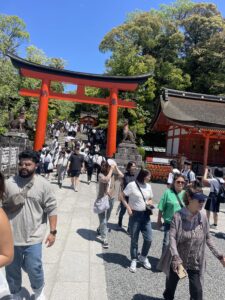
Kyoto’s headline sights are famous for good reason: the thousands of vermilion torii gates at Fushimi Inari Taisha, the wooden stage of Kiyomizu-dera overlooking the city, the gold-leaf pavilion of Kinkaku-ji and the bamboo grove in Arashiyama. They are also crowded from mid-morning onward, especially in spring and fall.
Our simple rule: go early or go late. Fushimi Inari is open around the clock, so a sunrise walk up the mountain trail feels completely different from a midday visit. Kiyomizu-dera opens early in the morning, and the lanes of Sannenzaka and Ninenzaka below it are calm before the shops open.
Balance the big names with quieter places. Smaller temples in northern and eastern Kyoto, the Philosopher’s Path along the canal, and the sub-temples of large complexes such as Daitoku-ji often feel like you have the gardens to yourself.
Temple and shrine etiquette in brief
- At a shrine, rinse your hands and mouth at the water basin before approaching the main hall.
- Remove your shoes where you see a step up or a shoe rack, and wear socks without holes.
- Photography is often banned inside halls; look for signs and ask when in doubt.
- Speak softly. Many of these places are active places of worship, not museums.
Gion and the World of Geiko: Look, Don’t Chase
Gion, Kyoto’s best-known entertainment district, is where you will find teahouses, lantern-lit lanes and, sometimes, a geiko or maiko hurrying to an evening appointment. Over the past decade, crowds following and photographing them became a real problem for residents.
Since April 2024, local residents have closed several private lanes in the Hanamikoji area of Gion to tourists, with signs warning of a fine for anyone who enters. The main public streets remain open. Please treat the geiko and maiko as working professionals: never block their path, touch their kimono or take close-up photos without permission.
The better way to experience this world is through a performance. In spring, Kyoto’s geiko districts stage public dance programs, and some cultural venues offer evening shows that introduce several traditional arts in one sitting. We can also help arrange a dinner where a maiko performs and talks with guests through an interpreter, which is a far more meaningful encounter than a hurried photo.
Tea, Food and Craft: Culture You Can Taste and Touch
Some of the most memorable Kyoto moments happen at a low table, not in front of a temple gate.
Tea ceremony. A small-group tea ceremony teaches you how matcha is whisked, served and received, and why every gesture matters. Many experiences take place in traditional machiya houses and run around an hour, which fits easily into a sightseeing day.
Nishiki Market and kaiseki. Nishiki Market, a covered street of food stalls, is a great place to sample pickles, tofu, yuba and sweets. Note that many shops ask visitors not to eat while walking, so enjoy your snacks at the stall. For a special evening, a kaiseki dinner showcases seasonal ingredients in a series of beautifully arranged small courses.
Hands-on crafts. Kyoto is known for crafts such as Kiyomizu-yaki pottery, Nishijin silk weaving and indigo and yuzen textile dyeing. Workshops let you try a technique yourself and leave with a keepsake that means more than anything from a gift shop.
When to Go
Kyoto has a strong personality in every season, but timing shapes the experience:
- Spring (late March to early April): cherry blossoms and peak crowds. Book well ahead.
- Summer: hot and humid, but July brings the Gion Matsuri, one of Japan’s most famous festivals.
- Fall (November): brilliant maple colors and another busy period.
- Winter: cold, quiet and often the best value, with temples at their most peaceful.
Practical Tips for U.S. Travelers
- Entry: As of October 2026, U.S. citizens can visit Japan for tourism for up to 90 days without a visa. Your passport must be valid for your whole stay, and airlines may expect at least six months of validity, so check yours before booking. Carry proof of a return or onward ticket.
- Safety: The U.S. State Department rates Japan at Level 1, “Exercise Normal Precautions” (checked October 2026). Always confirm the latest advisory at travel.state.gov before you fly.
- New taxes to budget for: Japan’s international tourist tax, charged when you leave the country, rose from ¥1,000 to ¥3,000 per person on July 1, 2026, and is usually built into your airfare. Kyoto also raised its local accommodation tax in 2026. Budget rooms still pay a small per-night amount, but the charge climbs steeply for luxury stays, so ask your hotel how it applies to your booking.
- Getting there: The shinkansen (bullet train) links Tokyo and Kyoto in a little over two hours. We will advise you on whether a rail pass or individual tickets make more sense for your route.
- Getting around: City buses get very crowded near major sights. Trains, the subway, taxis and walking are often faster. A rechargeable IC transit card makes trains and buses easy.
- Cash and cards: Cards are widely accepted, but small temples, shrines and market stalls may be cash only. Keep some yen on hand.
- Luggage: Consider shipping large suitcases between hotels with a luggage-forwarding service, so you are not dragging them through stations and onto crowded buses.
- Dress: Comfortable shoes that slip on and off easily will save you time at temples and traditional restaurants.
How We Build a Kyoto Culture Trip
At Black List Tours, we design Japan trips around the kind of traveler you are. For culture lovers, that usually means pairing Kyoto’s essential sights with early-morning visits, a few hands-on workshops, a memorable meal and a neighborhood where you can wander without an agenda. Many guests combine Kyoto with Tokyo and a day in Nara or Osaka. We handle the hotels, rail tickets, timed entries and local guides so your time in Japan goes to the experiences themselves, not the logistics.
Plan Your Kyoto Journey With Black List Tours
Ready to see Kyoto beyond the postcards? Black List Tours is a U.S.-based travel concierge founded in 2020 in Guaynabo, Puerto Rico, and our packages start under $999 USD per person. Fill out the trip request form on our homepage or explore our Japan trips page to get started. Prefer to talk it through? Call us at (305) 699-5093 or email info@blacklisttours.com. Adventure is around every corner, and we would love to plan yours.